
If you've ever walked through the streets of Lisbon, you know that irresistible aroma of freshly baked portuguese custard tarts wafting from every bakery corner. Making portuguese custard at home might seem intimidating, but with the right technique, you'll be pulling perfect portuguese custard tarts from your oven like a true pasteleiro.
This portuguese custard recipe delivers that signature caramelized top and creamy center that makes pastéis de nata so addictive. Let's dive into creating these Portuguese bakery treats that'll transport you straight to a sun-drenched café in Belém!

Why This Portuguese Custard Recipe Stands Out
This dinner dessert has a fascinating history that dates back to the 18th century when Catholic monks at Jerónimos Monastery in Belém first created the Pastel de Belém secret recipe. What makes portuguese custard tarts so special isn't just their rich custard filling made with plenty of egg yolks; it's the contrast between the crispy, flaky pastry tart and the smooth, barely-set custard that melts on your tongue. The caramelised custard tart top adds that final touch of perfection with its bittersweet notes.
While the original Pastel de Belém remains a closely guarded secret, this portuguese custard recipe captures the essence of those legendary tarts. You'll learn how to achieve that characteristic wobble in the center, the deep caramelization on top, and the satisfying crunch of puff pastry layers. Pair these portuguese custard cups with a strong espresso or a glass of port wine for an authentic Portuguese experience that works beautifully after any dinner party.
Jump to:
Ingredients
For the Custard Filling
- Whole milk
- Heavy cream
- Granulated sugar
- Egg yolks
- Cornstarch
- Vanilla extract
- Salt
For the Pastry
- Puff pastry sheets
- All-purpose flour
- Melted butter
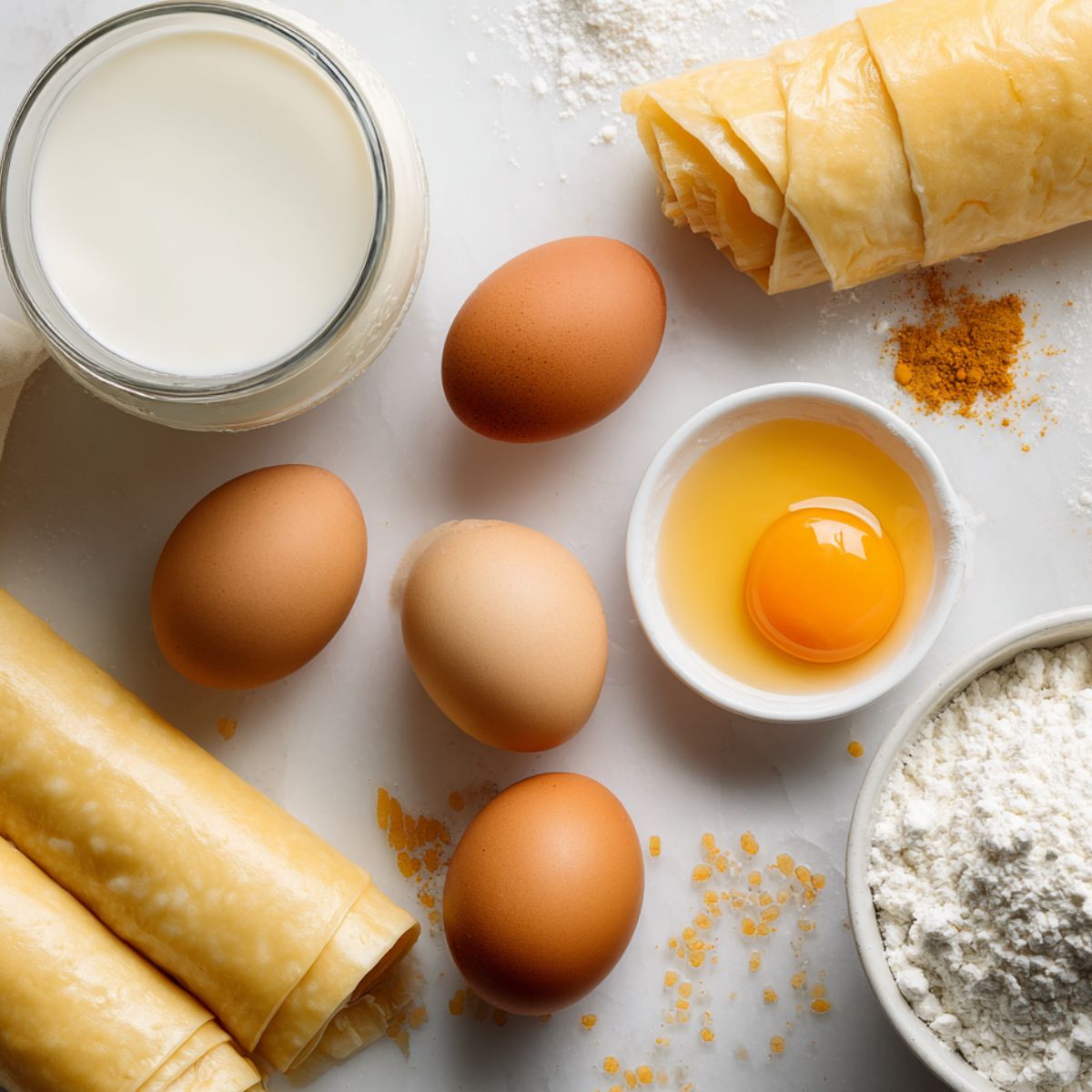
See recipe card for quantities.
Instructions
Step 1: Prepare Your Custard Base
- In a medium saucepan, combine the milk, heavy cream, and sugar over medium heat
- Stir continuously until the sugar dissolves completely and the mixture is warm but not boiling
- Remove from heat and let it cool for 5 minutes while you prepare the egg mixture
Step 2: Create the Silky Custard Filling
- In a separate bowl, whisk together the egg yolks and cornstarch until smooth and lump-free
- Slowly pour about half of the warm milk mixture into the eggs while whisking constantly to temper them
- Pour the egg mixture back into the saucepan with the remaining milk
- Cook over medium-low heat, stirring constantly with a wooden spoon, until the mixture thickens slightly (about 3-4 minutes)
- Remove from heat and stir in vanilla extract and salt
- Strain the custard through a fine-mesh sieve into a clean bowl to remove any lumps
- Cover with plastic wrap pressed directly on the surface to prevent skin formation and refrigerate for at least 30 minutes
Step 3: Shape Your Puff Pastry Shells
- Preheat your oven to 425°F (220°C) and generously grease a 12-cup muffin tin with melted butter
- Roll out the thawed puff pastry on a lightly floured surface to about ⅛-inch thickness
- Cut circles using a 4-inch round cutter (a wide-mouth glass works perfectly if you don't have a cutter)
- Gently press each pastry circle into the muffin cups, making sure the pastry comes up the sides
- Use your thumbs to create a slight overhang and press firmly into the corners for that authentic portuguese custard cup shape
Step 4: Assemble and Bake to Golden Perfection
- Fill each pastry-lined cup about three-quarters full with the chilled custard mixture
- Place the muffin tin in the preheated oven on the middle rack
- Bake for 18-22 minutes until the pastry is golden brown and the custard has dark caramelized spots on top
- The portuguese custard should still have a slight jiggle in the center when you gently shake the pan
- Remove from the oven and let cool in the tin for 5 minutes before carefully transferring to a wire rack
- Dust lightly with cinnamon and powdered sugar if desired, just like you'd find at a traditional Portuguese bakery
Expert Cooking Tips
Getting that perfect portuguese custard consistency requires these key tricks:
- Temperature matters ; increase oven to 425°F for the last 5 minutes for better caramelization
- Temper eggs slowly ; add hot milk gradually while whisking to avoid scrambling
- Look for the wobble ; custard should jiggle slightly when removed from oven
- Keep pastry cold ; warm dough won't puff properly
- Brush with butter ; adds extra flakiness to your pastry cups
Recipe Variations & Substitutions
Traditional Portuguese Custard with Cinnamon Add half a cinnamon stick to the milk mixture while heating, then remove it before adding to the eggs. This creates that warm, spiced flavor found in many Lisbon pastry desserts. Dust the finished tarts with extra ground cinnamon for an authentic touch.
Chocolate Portuguese Custard Cups Melt 3 ounces of dark chocolate into your warm milk mixture for a decadent twist on the classic. This variation pairs beautifully with the puff pastry and adds a modern flair while maintaining that signature portuguese custard texture.
Citrus-Infused Version Replace vanilla extract with the zest of one lemon or orange. This brightens the flavor profile and is closer to some regional variations of Portuguese egg yolk desserts found throughout Portugal.
Dairy-Free Alternative Use full-fat coconut milk and coconut cream in place of dairy. The texture won't be identical to traditional portuguese custard tarts, but you'll still get a delicious result with that characteristic wobble.
Mini Pastéis de Nata Use a mini muffin tin and reduce baking time to 12-15 minutes. These bite-sized Portuguese bakery treats are perfect for parties and allow guests to sample more than one.
Savory Portuguese Custard Option While not traditional, you can create a savory version by reducing sugar to 2 tablespoons and adding sautéed onions, cheese, and herbs. These make an interesting dinner appetizer rather than dessert.
Equipment Recommendations
You don't need a professional kitchen to make outstanding portuguese custard at home, but these tools will make your life easier:
- 12-cup muffin tin ; essential for creating the classic tart shape (non-stick works best)
- Fine-mesh strainer ; removes any lumps for that silky smooth portuguese custard filling
- Rolling pin ; helps achieve even puff pastry thickness
- 4-inch round cookie cutter ; creates perfect circles for your pastry shells (a wide-mouth jar works too)
- Wooden spoon ; ideal for stirring custard without scratching your pan
- Heavy-bottom saucepan ; distributes heat evenly and prevents scorching
- Digital instant-read thermometer ; takes the guesswork out of custard temperature (optional but helpful)
- Wire cooling rack ; allows air circulation for crispy bottoms
Budget-friendly tip: if you don't have a muffin tin, you can use individual tart molds or even small ramekins to create portuguese custard cups with a slightly different presentation.
Storage & Meal Prep Tips
Store portuguese custard tarts in an airtight container in the refrigerator for up to 3 days. Reheat in a 350°F oven for 5-7 minutes to crisp the pastry.
- Freezing ; freeze unbaked tarts for up to 2 months, bake from frozen adding 5-8 minutes
- Make-ahead custard ; prepare filling 2 days in advance, store covered in fridge
- Never microwave ; it makes the pastry soggy and ruins the texture
Mastering the Caramelized Top
Here's the secret that separates good portuguese custard from extraordinary pastéis de nata: that gorgeous caramelized top with its deep amber spots. Professional bakers in Portugal often use a kitchen torch or a salamander broiler to achieve this effect. After your tarts have baked and the custard is set, you can carefully run a kitchen torch over the tops to create those characteristic dark spots that give portuguese custard tarts their signature appearance.
If you don't have a torch, try this trick: once your portuguese custard tarts are done baking, turn your oven to broil on high. Place the muffin tin on the top rack and watch carefully for 1-2 minutes until dark caramelization appears. This final step is what transforms a simple custard tart into an authentic Portuguese sweet pastry heritage dessert that rivals anything you'd find at a traditional Lisbon bakery.
FAQ
Are pastéis de Belém worth it?
Absolutely! Pastéis de Belém are worth seeking out in Lisbon. Made from a secret recipe guarded since 1837, these portuguese custard tarts from the original Fábrica de Pastéis de Belém are the gold standard.
What exactly is Santa nata?
"Nata" means cream in Portuguese. Pastel de Nata refers to the portuguese custard tart itself. There's no "Santa nata" in Portuguese cuisine; the dessert is called pastel de nata, which translates to "cream pastry."
What is Portugal's most famous dessert?
Portugal's most famous dessert is the Pastel de Nata, a portuguese custard tart with crispy, flaky pastry and rich custard center. These Portuguese egg tarts originated in the 18th century at the Jerónimos Monastery in Belém.
What are Portuguese custards called?
Portuguese custards are called pastéis de nata. The most famous version from Belém in Lisbon is specifically called Pastéis de Belém. These portuguese custard tarts are one of Portugal's most beloved traditional desserts.
Sweet Endings Await
You've just unlocked the secrets to creating authentic portuguese custard tarts that rival the best Lisbon pastry shops. These golden treats with their creamy centers are perfect for ending any dinner on a high note, and the beauty of portuguese custard is that it comes together with simple ingredients you can master in your own kitchen.
Try pairing your portuguese custard mastery with our Breakfast Oatmeal Custard Recipe for a morning twist, or explore our Baked Oats Without Banana for another easy baked treat. Each bite of these portuguese custard tarts brings a taste of Portugal's rich heritage to your table!
Golden, flaky, and absolutely irresistible; that's my promise to you! ✨ - Adams
Related
Looking for other recipes like this? Try these:



Pairing
These are my favorite dishes to serve with this Portuguese Custard recipe:



Portuguese Custard Tarts (Pastel de Nata)
Equipment
- 12-cup Muffin tin
- 1 Rolling Pin
- 1 4-inch round cutter or wide-mouth glass
- 1 Fine-mesh strainer
- Mixing bowls
- 1 Saucepan
- 1 Wooden spoon
- 1 Wire cooling rack
Ingredients
For the Custard Filling
- 1 cup Whole milk
- 1 cup Heavy cream
- 1 cup Granulated sugar
- 6 large Egg yolks
- 3 tablespoons Cornstarch
- 1 teaspoon Vanilla extract Substitute with lemon zest for a traditional touch
- 1 pinch Salt Balances sweetness
For the Pastry
- 1 package (14 oz) Puff pastry sheets Thawed
- All-purpose flour For dusting
- Melted butter For greasing muffin tins
Instructions
- Heat milk, cream, and sugar in a saucepan until warm (not boiling).
- Whisk egg yolks with cornstarch in a bowl until smooth.
- Slowly temper the eggs with the warm milk mixture, stirring constantly.
- Return mixture to pan and cook over medium heat until thickened. Stir in vanilla and salt.
- Strain custard through fine-mesh strainer and chill for 30 minutes.
- Roll out puff pastry, cut into 4-inch circles, and press into greased muffin tin.
- Fill each with chilled custard and bake at 425°F for 18–22 minutes or until tops are dark golden.
- Cool 5 minutes in pan, then transfer to wire rack. Optionally dust with cinnamon before serving.
Leave a Reply